

March 18, 2026
Having a perfect smile can boost your confidence and be a plus point for your overall appearance. Cosmetic dentistry treatments, such as veneers and dental bonding, can help restore your smile if you have chipped, stained, or uneven teeth. One of the most common questions that patients ask when visiting a trusted dentist in Waterloo is which option is best. Both methods help improve the appearance of teeth, but differ in cost, longevity, and approach. Awareness of these variations may help you select the optimal treatment for your oral health needs.
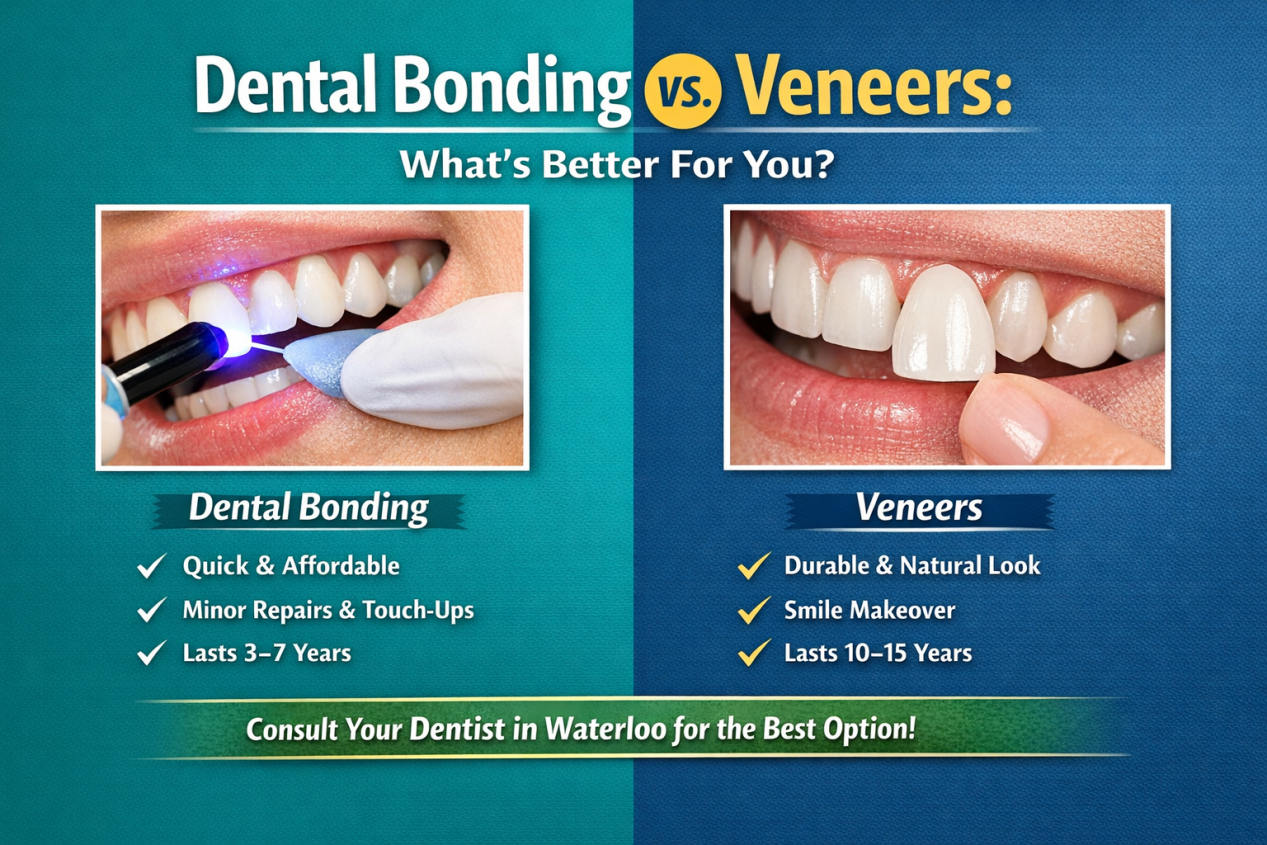
And, at a professional dental clinic, a Waterloo dentist will tell you what can work best for your oral health and cosmetic goals within your budget.
What Are Dental Veneers?
Dental veneers are thin shells that cover the front of the teeth and improve their aesthetics. They are custom-made to match the colour and shape of your natural teeth.
Veneers are frequently used to correct:
- Discoloured or stained teeth
- Chipped or cracked teeth
- Small gaps between teeth
- Slightly misaligned teeth
- Worn-down teeth
Benefits of Veneers
- Durable results (usually 10–15 years or longer)
- Highly natural and aesthetic appearance
- Strong and resistant to stains
- Ideal for complete smile makeovers
But veneers typically require removing a small amount of enamel, making the process more permanent.
What Is Dental Bonding?
Dental bonding is a cosmetic procedure that involves applying tooth-coloured composite resin directly to the tooth, which is then hardened with a special light. This treatment enhances appearance and repairs minor damage.
Dental bonding is often recommended for:
- Small chips or cracks
- Minor gaps between teeth
- Slight discoloration
- Minor reshaping of teeth
- Benefits of Dental Bonding
- Usually completed in one visit.
- More affordable than veneers
- Little or no enamel loss
- Rapid fix for minor cosmetic problems
However, bonding is also less durable, lasting only 3–7 years, depending on oral care and lifestyle habits.
Veneers and Dental Bonding: Important Differences
Below are some of the key differences between these two cosmetic dental treatments:
Durability
Veneers: 10–15 years or longer with appropriate care.
Bonding: 3–7 years bond lifespan; likely repairs or replacement required
Cost
Veneers: More expensive in the beginning because they are practically custom-made.
Bonding: Budget-friendly solution for minor cosmetic enhancement.
Procedure Time
Veneers: Typically need two or more visits.
Bonding: Usually done in one visit.
Appearance
Veneers– Create a straighter, natural-looking smile with the ‘fixed’ treatment
Bonding: Good for small fixes, but not as smooth and seamless as veneers.
Which Option Is Right for You?
There’s no “better” option – it ultimately comes down to your dental needs and long-term goals. A tooth specialist dentist in Waterloo may recommend:
Choose Veneers If:
- You desire to undergo a full cosmetic smile makeover.
- You want a delivered solution for a long time.
- You want maximum stain resistance.
Choose Dental Bonding If:
- You have minor cosmetic issues.
- You need a faster and less expensive solution.
- You like the sound of a non-invasive option.
Final Thoughts
Both veneers and dental bonding can dramatically enhance your smile. Veneers are a long-term, durable cosmetic aid, whereas bonding is typically used when your tooth requires fast, inexpensive treatment. An experienced dentist from a trusted dental clinic in Waterloo will help you figure out which treatment will work best for your needs.
Make an appointment with King Street Dental Centre today to determine the best cosmetic dental options to get you on your way to a healthier, more confident smile.